Cassatt’s Charm and Power |
Young Lady in a Loge* Gazing Right, 1878-9
|

|
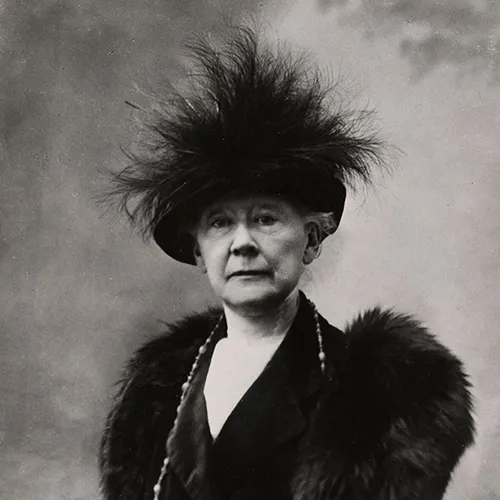
This painting, originally owned by Paul Gaugin, sold at auction for $7.4 million in 2022. “Mlle Cassatt has as much charm, but she has more power” than the other female artists of our time. -Paul Gauguin Mary Cassatt was an American painter and printmaker, who boldly rebelled against the expectations set for her as a woman in the 19th century and traveled to Europe to find her independence as a professional artist. She made her name as an Impressionist, renowned for her intimate depictions of women, particularly mothers and children, and for her insight into the female inner life. *a private box or enclosure in a theater. SeeAs you look at the following images of Cassatt’s work, look not only at her subjects but take a minute to look closely at the compositions. Where do you look first? How does your eye move around the picture? What does she include within the frame, what’s just outside the frame?
In an era when women were often relegated to the sidelines of the art world, American artist Mary Cassatt boldly carved her own path, becoming one of the most influential Impressionists of her time. What made her truly revolutionary? She dared to paint what others overlooked – the intimate, everyday moments between mothers and children. Cassatt pioneered new ways of depicting women as active, thinking beings rather than passive subjects. Whereas her male contemporaries painted women as objects, she captured the tender glances, the gentle embraces, and the quiet moments of daily life that defined the relationship between mothers and their children. Her work elevated these “domestic” scenes to high art, challenging the artistic conventions of her time.
The first American woman to exhibit with the French Impressionists
This young woman sits at her dressing table arranging her hair. She is looking at herself in a mirror just outside the frame. Cassatt is referencing a popular tradition in European painting: male artists depicting women dressing or undressing. These works show erotic fantasies of women in private spaces. By contrast, Cassatt’s sitter is enjoying a peaceful moment of self-regard. Her ruddy complexion, large teeth, and recessed chin do not match the beauty ideals of the time. The reality she presents in this well-crafted painting assigns value to this young woman who is as average as the rest of us. This painting was traded to Degas after the Impressionist Exhibit. They were good friends, and he is known to have said that her work indicates that she was a kindred artist: “There is someone who feels as I do.” He admired this painting so much that it hung prominently in his studio until he died.
The discovery of Japanese woodblock prints (ukiyo-e) revolutionized Impressionist art in the late 1800s, inspiring artists like Mary Cassatt, Claude Monet, and Vincent van Gogh to embrace bold colors, flattened perspectives, and unconventional compositions that broke free from traditional Western artistic rules. In The Letter, Cassatt used the patterns of the woman’s dress and wallpaper as well as vibrant printing inks to manipulate space and formal elements inspired by Japanese art. Mastery beyond the subject matter:
 Little Girl in a Blue Chair, 1878 The girl’s pose has the naturalism of childhood that characterizes many of Cassatt’s paintings of children. Cassatt developed a unique style combining Impressionist light and color with strong, modern composition
Cassatt had a substantial impact on the art world and acted as an inspiration to female artists everywhere.
In addition to being a trailblazer for women in the art world at that time, Cassatt was also a shrewd art collector and negotiator. Because of her eye for important works of Impressionist works of art, many American museums now hold significant collections of key artists she helped bring to American Museums like Edgar Degas (her mentor and close friend), Claude Monet, Édouard Manet, and Camille Pissarro. SayEduard Manet and Cassatt were both significant artists in the Impressionist movement. Manet painted ‘Boating’ the same year Cassatt was born. She created ‘The Boating Party’ 50 years later.
DoCassatt was influential as an artist, collector, and suffragist. At the time women were not encouraged to have careers. She became an artist against her family’s wishes and without the support of art schools. (She attended but professors would not let her into life drawing sessions and instead, she was made to draw inanimate objects.) It was through her own volition that she became a force in the art world.
About the Artist: Mary Cassatt
Mary Cassatt was born into an affluent family in Pennsylvania on May 22, 1844. She studied at the Pennsylvania Academy of the Fine Arts, one of the country’s leading art schools. In addition to having regular exhibitions of European and American art, the faculty at the Academy encouraged students to study abroad. In 1865 Cassatt approached her parents with the idea of studying in Paris. Despite their initial objections, Cassatt’s parents relented and allowed her to go. |