


What if the time you spend sketching, singing, visiting a gallery, or losing yourself in a good book wasn’t just good for your soul, but was actually, measurably slowing down how fast you age?
A landmark new study from University College London says: yes. Really.
See
I have heard reference to this a few times this week and became intrigued.
Researchers analyzed the DNA of more than 3,500 adults in the UK, using seven different biological aging clocks, tools that measure the accumulation of biomarkers in your cells to determine how old your body truly is on the inside.
While reading about the positive impacts of art engagement on your life, look at Ruby Silvious’ little teabag painting series called Museum Goers. Learn about her process here. What started as a simple personal challenge to paint something daily onto a tea bag went viral on Instagram and now she is known worldwide.

After studying the DNA, they looked at one key variable: arts and cultural engagement.
The activities counted were beautifully broad: painting, singing, dancing, crafting, reading, visiting museums, exploring heritage sites, attending performances and exhibitions.

What they found stopped me in my tracks.
People who engaged with the arts once a month had a biological age nearly 0.8 years younger than those who rarely participated. Those who engaged weekly? Almost a full year younger biologically.
That’s a 4% slower rate of aging.
Put another way: engaging with the arts is as beneficial to your biological age as physical exercise. (I love this!!)

The strongest benefits were seen in people who mixed it up and took part in a variety of creative activities, not just one. And here’s the kicker: the older you are, the more powerful the effect becomes.

Lead researcher Daisy Fancourt and her team concluded that creative and cultural activities deserve to be recognized as a public health practice right alongside exercise and eating well. The project is part of a seven-year research program funded by Wellcome, exploring the biological and global health impacts of artistic engagement.
Say
I’ve spent 30 years watching art do things in classrooms that nothing else could.
I’ve seen it calm a child in crisis, connect a 10 year old to their own story, bring a grieving community back to itself. I’ve watched it dissolve anxiety in a watercolor workshop and spark genuine joy in a room full of adults who swore they “weren’t creative.”
But I’ll admit that I didn’t have a word like biological aging clock to put to it.
Now we do.
When you pick up a brush, hum a song, wander through a gallery, or lose an afternoon making something with your hands, you’re not being indulgent. You’re not wasting time. You are doing something profound for your body, your mind, and your future self.
Art isn’t a luxury we earn after the real work is done.
Art is the work.
- “Think about a moment when making or experiencing something creative left you feeling genuinely lighter. What were you doing? Where were you?”
- “What creative practice has been calling to you lately, one you keep calling off until ‘later’?”
Do

- Take a walk and look at public art – find it on the Wonder Wander app.
- Give yourself one hour of unstructured creative time. No goals. No finished product required. No judging what you make.
- Pull out watercolors and paint something just for the feeling of it
- Wander through a museum or gallery (even virtually at these online museums)
- Make something with your hands (collage, clay, fabric, anything)
- Sing along to a song you love, badly and joyfully
- Read something purely for pleasure
Sources:
- UCL Study – NPR: Engaging with the arts can slow biological aging
- The Guardian: Arts and cultural engagement linked to slower pace of biological aging
- WTTW/CNN: Engaging with arts and culture can slow biological aging as much as exercise
- PMC/NIH: Receptive and participatory arts engagement and health outcomes in older adults
About the Artist: Ruby Silvious
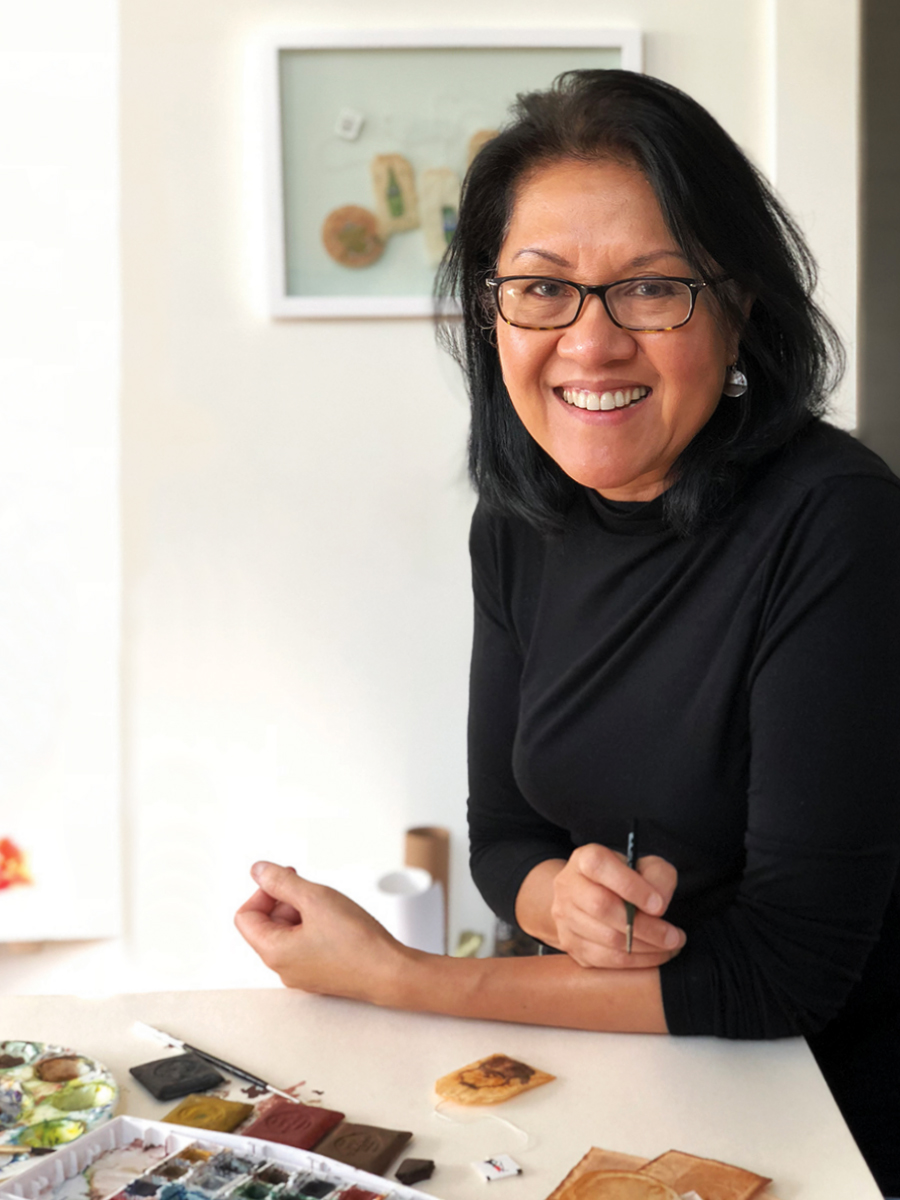
Ruby Silvious, b. 1957 in Tacloban City, Philippines, is internationally recognized for her innovative approach to art which uses everyday materials as her canvas. She gained recognition for her 363 Days of Tea project, where she transformed emptied-out tea bags into miniature works of art for 363 consecutive days. Ruby has written two books: 363 Days of Tea: A Visual Journal on Used Teabags (Mascot Books, 2016), and Reclaimed Canvas: Reimagining the Familiar (Mascot Books, 2019), showcasing her artistic journey and exquisite use of common materials as art. She has explored commonplace items such as eggshells, leaves, wine corks, vintage envelopes, paper bags, and most recently paper receipts as canvases for her paintings and collages. Ruby wants viewers to keep an open mind and think beyond the boundaries of what they may consider traditional art.
Her artwork, including her tea bag paintings inspired by her travels around the world, has been featured in numerous publications including CNN Travel, Vogue Italia, Cosmopolitan China, Disney Malaysia, The Guardian, Der Spiegel, North American Review, National Geographic Kids, Good Morning America/ABC News, and the internationally syndicated Ripley’s Believe it or Not. Silvious was educated in the U.S. and Asia; she currently lives in New York’s Hudson Valley. Her art is exhibited internationally and is featured in public and private collections.


