Say
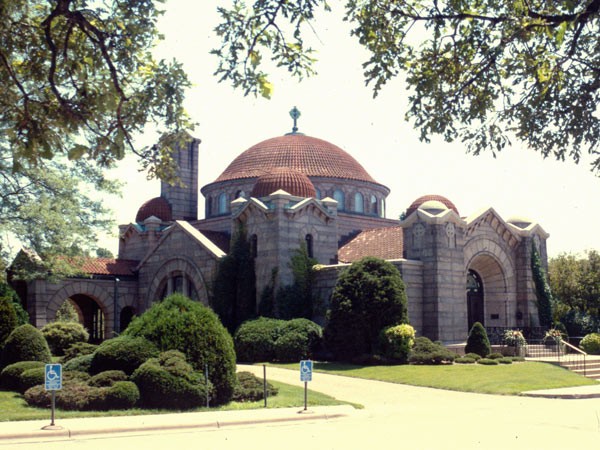
When the Memorial Chapel was completed in 1910, it was the only building in America with an authentic mosaic interior. Think about that for a moment. At a time when Byzantine art was something you’d travel to Europe to see, Minneapolis became home to what many consider the most perfect example of this ancient art form in the United States.
The story behind its creation is just as remarkable as the chapel itself. Designer Charles Lamb traveled to Rome in 1909 to find the right artists for this ambitious project. He enlisted six highly accomplished mosaic masters who had just completed work in the Vatican—artists at the absolute peak of their craft. These artisans created millions of individual tesserae, then traveled across the Atlantic to Minneapolis to assemble their masterpiece by hand.
Architect Harry Wild Jones modeled the chapel after the Hagia Sophia in Istanbul, Turkey, creating a direct link between this Midwestern sanctuary and one of the world’s most iconic Byzantine structures. Today, experts believe a work of such magnitude couldn’t be recreated at any price—the artisans possessing these specialized skills have passed into history.
The chapel’s dedication to excellence didn’t end with its construction. During a 1996 renovation, architect Jim W. Miller carefully studied letters exchanged among Jones, Lamb, and the original building committee to undo well-meaning but misguided alterations (like yellow paper over stained-glass and brown carpet over marble floors) and restore the space to its original vision.
What hidden architectural treasures have you discovered in your community? I’d love to hear about them!
Do
Visit in person: The Memorial Chapel at Lakewood Cemetery (3600 Hennepin Ave., Minneapolis) welcomes visitors. Check with the Welcome Center for current chapel hours.
Look for light: Notice how the stained-glass windows transform throughout the day, creating an ever-changing play of color across the mosaics. Visit at different times to see how light becomes part of the art.
Study the tesserae: If you can get close enough, observe the individual mosaic pieces. Each tiny square of marble, stone, or glass-fused-with-precious-metal was placed by hand. Imagine the patience, skill, and vision required to create this symphony of color and light.
Reflect on the figures: Spend time with Love, Hope, Faith, and Memory. Which one speaks to you today? What does each figure’s posture, expression, or surrounding details communicate?
Create your own mosaic-inspired art: You don’t need millions of pieces to explore mosaic techniques. Try creating a small mosaic using colored paper, broken tiles, or even natural materials like stones and seeds. Experience firsthand the meditative quality of placing each piece with intention.
Share the wonder: How many people in your community know about this architectural treasure? Share this story and invite someone to visit with you. Hidden gems like this deserve to be celebrated!
Artists: Charles Rollison Lamb & Ella Condi Lamb
Born and raised in New York City, he studied under William Sartain at the Art Students’ League. He was a member of his father’s firm, the J&R Lamb Studios. He was a founding member of the National Sculpture Society. He was best known for ecclesiastical architecture and memorial and historical art.
His wife, Ella Condie Lamb was a portrait artist and muralist. In 1888, she married Charles Lamb with whom she had five children. Ella joined the J&R studio creating stained-glass designs and murals.
While the chapel interior was designed by Lamb, the four large portraits representing Love, Faith, Hope, and Memory were based on the portraits by his wife, Ella Lamb.
Learn more @ Lakewood Cemetery