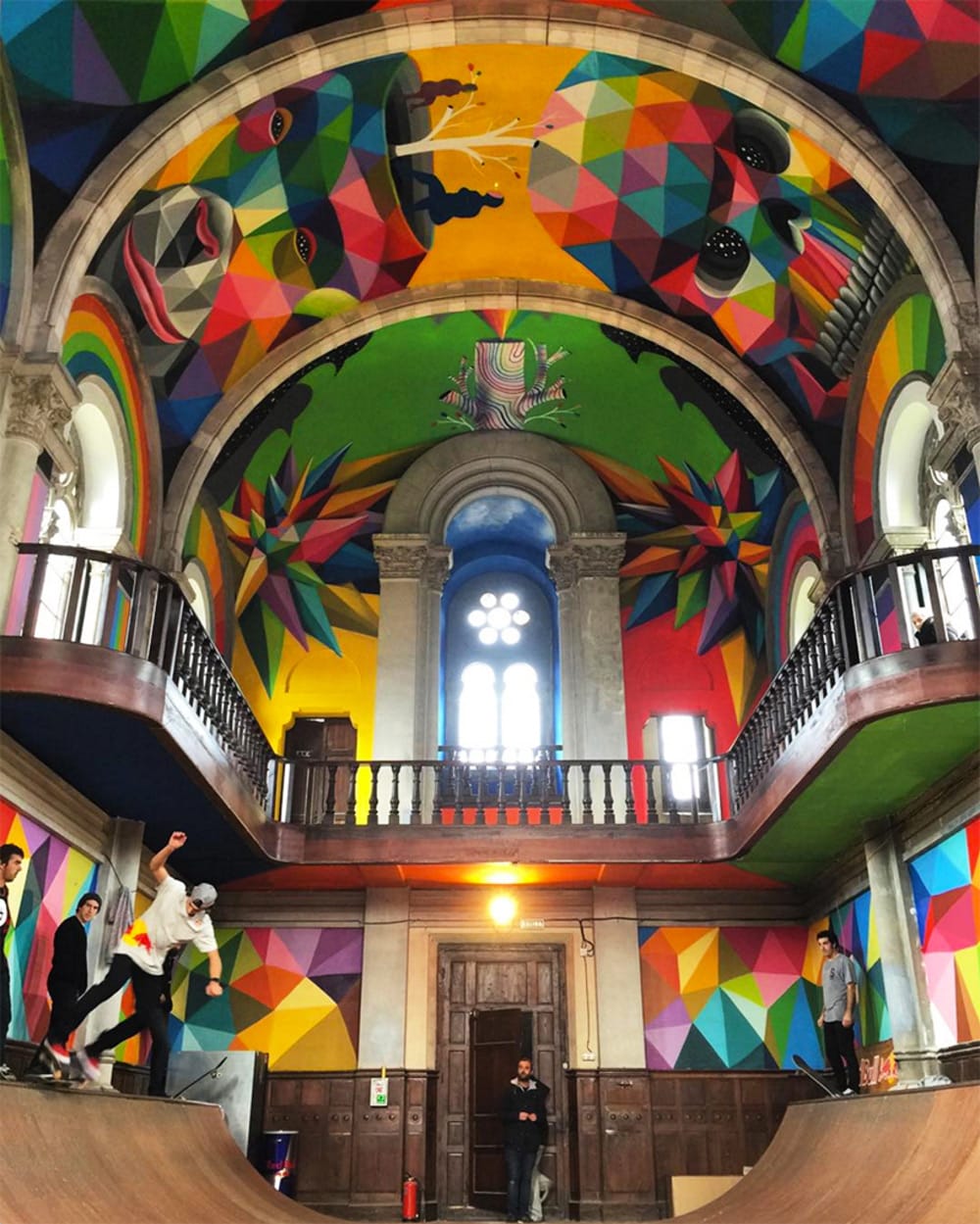
Happy New Year! This year we have explored growing our sense of wonder through blasts of intense color when we most needed it, walking through the thresholds of our imagination, nature through magical bioluminescence, and many, many hands-on attempts to access our sense of wonder through creativity. Many of you have shared how the Weekly Wonder has stretched and delighted you. When you enjoy it, you share it…THANKS! We have increased our subscribers, and many free subscribers have decided to support my work financially by becoming paid members; THANK YOU! Please continue to share if you know someone who would appreciate a lift of wonder in their lives. My intention for 2023 is to increase my impact on the world.
New
I am offering a new course called 30 Days of Wonder ! Join me on a journey to enhance your life through the infusion of wonder! 30 days of prompts include simple activities, art images, and creative mindfulness techniques. Register for the 30 Days of Wonder now. Paid subscribers, register here to receive 50% off!
See
This week I thought it would be fun to explore the work of Chinese Artist Cai Guo-Qiang. I love fireworks. The loud bang, the unpredictability of the explosion, the color, the variety, and the way it transforms the sky and connects all on the ground “Oohh-ing” and “Ahh-ing” after each blast.

A 2016 painting made with colored gunpowder.PHOTO: YVONNE ZHAO, COURTESY OF CAI STUDIO

Cai Guo-Qiang, Mountain in Heat, 2016. Gunpowder on canvas. Photo by Wen-You Cai, courtesy of Cai Studio

Cai Guo-Qiang, Sky Ladder, 2015. Realized off Huiya Island, Quanzhou, June 15, 4:45 am (dawn),
100 seconds, fuse and helium balloon 500x 5.5m.Photo by Wen-You Cai, courtesy of Cai Studio ( Ambush )
The restlessly inventive artist Cai Guo-Qiang is known for his radical experimentation with materials—especially gunpowder, which he has used to ignite his drawings and to stage explosive events outdoors for awestruck viewers worldwide. (The Art Newspaper)

Cai Guo-Qiang overseeing the ignition of his gunpowder painting Study of Birds (2018)Photo: Tatsumi Masatoshi; courtesy of Cai Studio
Daytime Fireworks.
Cai’s daytime fireworks use exclusively non-toxic, eco-conscious, CE-certified pyrotechnic products. caigouqiang.com


The Birth of Tragedy, 2020
Realized on the Charente River, Cognac, September 25, 3:10 pm, 15 minutes
21,915 fireworks, 150 oak barrels
Commissioned by Hennessy X.O.

Courtesy Cai Guo-Qiang
Remembrance , chapter two of Elegy, an explosion event on the Huangpu River near Shanghai’s Power Station of Art in 2014.
Say
The translation of Gun Powder in Chinese is “Fire Medicine” or “Medicine of Fire” It was made by alchemists investigating immortality. Later its destructive powers were discovered.
- Discuss the irony of the juxtaposition of these two vastly different uses for this chemical compound.
- How does Cai Guo-Qiang’s work remind you of the work of the alchemist?
- Read Cai Guo-Qiang’s seven values below. Then, name your top 7 values. Then, think about how you can live them out in 2023.
Do
Watch the Process Cai Guo-Qiang uses to create his explosive paintings.
About the Artist: Cai Guo-Qiang

Cai Guo-QiangPhoto: Yvonne Zhao; courtesy of Cai Studio
(b. 1957, Quanzhou, China) Cai (pronounced “sigh”), an energetic international traveler based in New York, is perhaps best known for his gunpowder drawings. He was trained in stage design at the Shanghai Theatre Academy from 1981 until 1985. His work has since spanned multiple artistic mediums, including drawing, painting, installation, video, and performance art. Cai began to experiment with gunpowder painting in his hometown Quanzhou and continued exploring the practice while living in Japan from the end of 1986 to 1995. He continued to evolve the scale and form of these gunpowder works, which eventually led him to develop his signature outdoor explosion events. Drawing upon Eastern philosophy and contemporary social issues as a conceptual basis, his often site-specific artworks respond to the local culture and history and establish a dialogue between viewers and the larger universe around them. His explosion art and installations are imbued with a force that transcends the two-dimensional plane to engage with society and nature. (thaartnewsletter)
How
The artist sketches on high-quality Japanese paper placed on the floor, often also laying down stencils he has cut out from cardboard. Sometimes he adds foliage or garments like abayas (for Memories (2011), presented in Doha, Qatar) to the mix. Then he sprinkles gunpowder carefully around the lines, covers the ensemble with sheets of cardboard weighed down with bricks or rocks to control the force of the explosion, and lights the fuse. As onlookers watch tremulously, a blast ensues, and once assistants have stamped out embers and the smoke has cleared, the singed residue of the “drawing” is visible. (caiguoqiang.com)
- Transcultural Dialogue
- Development
- Public Art & Politics
- Environmental Sustainability
- Interdisciplinary Practice
- Art History & Cosmos
- Art Methodology