David Popa scales his work by combining traditional grid techniques, modern drone technology, and a deep respect for the natural world. His process is a blend of ancient art-making and digital-era precision—always temporary, always site-specific, always biodegradable.
See
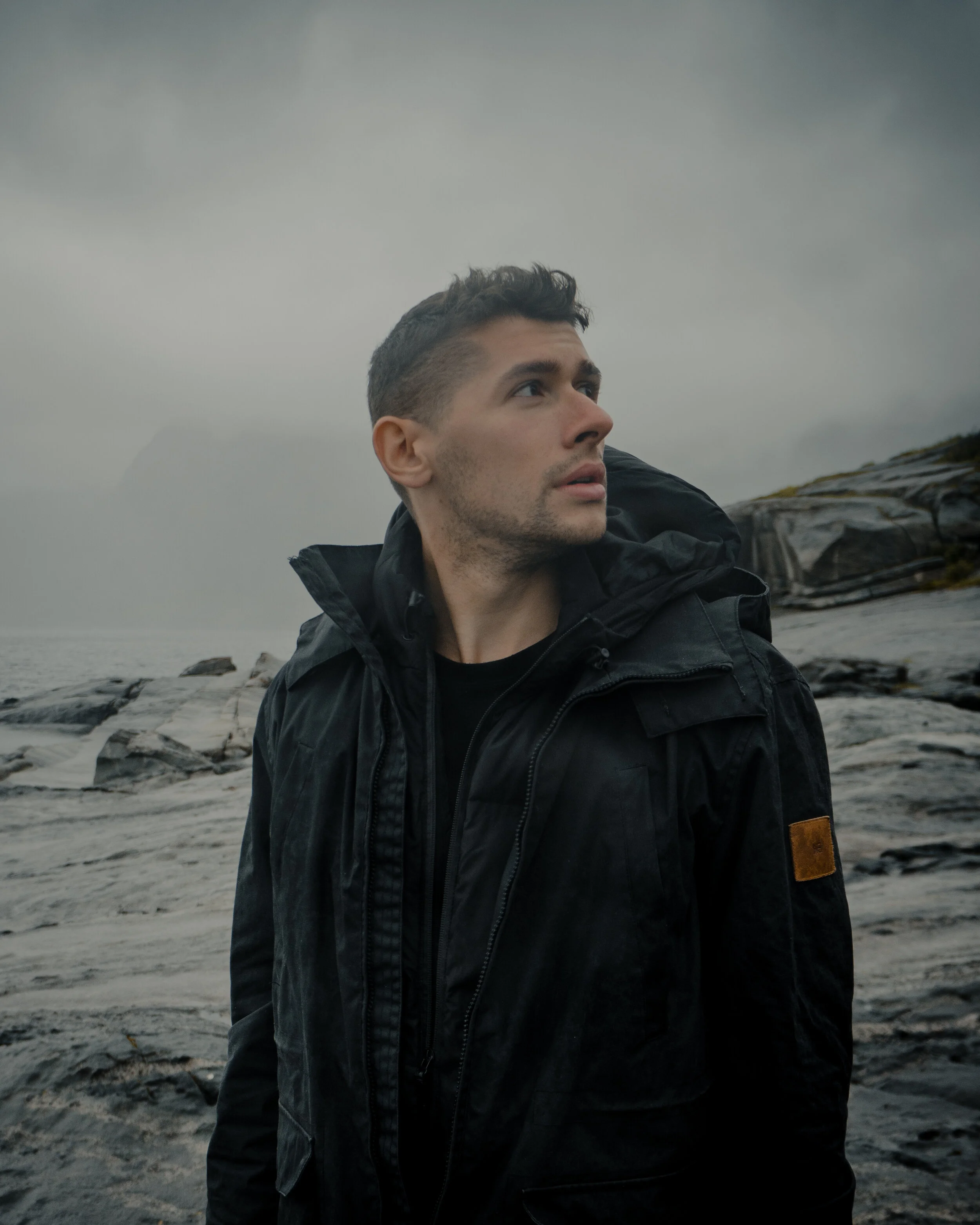
Look closely at the awe-inspiring artwork of David Popa. Some of the pictures I chose, include him for comparison. I can’t get over the scale and precision. Even though he uses tried methods, he must trust them as stepping back is not actually possible!
Fractured Series
David Popa scales his work by combining traditional grid techniques, modern drone technology, and a deep respect for the natural world. His process is a blend of ancient art-making and digital-era precision—always temporary, always site-specific, always biodegradable.
“I was painting [a] piece on a large rock and first of all, it looks very bizarre because I’m using these big sprayers, and it almost looks like I’m disinfecting the rock or something. A lot of people would see me across the island from the mainland and think I was a biologist, and they’d come over and ask what I was doing. Also, the work is so large that when you’re standing right next to it, you have no idea, no conception of what’s going on. And the techniques I’m using in order to pull it off are simple, but actually quite, quite complex. It was funny to see their confusion.” — David Popa (Natural Earth Paint Interview)
Emergence
“I’ve always dreamed of creating a piece like this—where the figure feels halfway submerged, caught in the liminal space between what was and what’s to come. This piece was created on a frozen islet in the Baltic Sea, where the landscape itself guided the vision. The islet, surrounded by rippling ice edges, seemed to rise from the water, offering the perfect canvas for this piece.
Created with nothing but charcoal and water sprayed from a common garden sprayer, “Emergence” speaks to renewal, resilience, and the beauty in scars. It’s a baptism of sorts—a figure bruised by the past but rising again, ready for new life.” Popa
“Metamorphosis”
Charcoal on Snow, Lofoten Islands, Norway
Say
“The charcoal will sink into the ice and disappear from a very dark shade to a medium shade, so it has to be created very quickly and documented. No to mention the work on the ice will just crack and drift away completely, or the next day it will snow and be completely covered.”- Popa
How does the ephemeral nature of Popa’s work enhance the sense of wonder around it?
When have you been so close to something you are working on that you couldn’t see the whole picture? How did that feel?
What kinds of feelings does David Popa’s large scale work provoke?
What if they were small?
Do
Ephemeral Approach: Popa’s philosophy emphasizes collaboration with nature rather than domination. He often chooses locations where tides, meltwater, or weather will naturally erase the work over time.
Watch this fascinating 43 min documentary about the Transcendence Project
For a deeper dive into David Popa’s world and his artistic journey, explore his official website and immerse yourself in the profound mysteries of his creations.
Go out in nature and create an ephemeral piece of art using the materials around you. Maybe it’s a sandcastle?
About the Artist: David Popa
David Popa is an artist born and raised in NYC currently based in Finland. His interest in the arts spawned from a tight mentorship with his Father Albert Popa who was one of the first Graffiti Writers in NYC and later taught him traditional painting at a young age. However, what ultimately spurred Popa to pursue the arts full time were the adventures to be had outside the studio. His interest in Street Art/Contemporary Muralism was the catalyst for the work he presently creates.
His current body of work uses all natural pigments mixed only with the source water to create site-specific, ephemeral earth-works captured through the eye of a drone. The large-scale work Popa paints, mostly on islands/islets in the nordic region, are documented and portrayed through photography,short films and most recently as NFT’s (Unique Digital Works of Art). He is represented by MTART Agency, one of the worlds leading Art Agencies.
Popa’s work seeks to enter into the realm of anthropology as it relates to origin, nature and the destiny of human beings. By using natural pigments such as charcoal, earth pigments and ground shells, he uses the same raw materials that would have been used in the earliest cave paintings 40,000 years ago. Early cave-painters are assumed to have gone to great lengths to not only collect and create these pigments, but also to create the works within the deep caves they reside in. Similarly, Popa seeks remote locations that appear otherworldly and ethereal.
The result is work that appears to be a revealing of a latent life, waiting to be uncovered. This uncovering however, is incredibly brief, as some works have washed back into nature in a matter of a few days to a few months. While the work is being created and documented, unsuspecting events often occur, from bird droppings that appear as dynamic brushstrokes, changing tides that reveal new rock layers, varying light that illuminate various surfaces and even oncoming storms that wash the piece away significantly, which reveal an altered yet beautiful remnant of what was created. It is this dynamic conversation with the ephemeral, natural world that infatuates Popa and beckons the viewer to consider the nature of our brief existence and relish in it’s profound mysteries and everyday miracles.
Water Mark by Laura Haddad and Tom Drugan is a Scottsdale public art installation of aluminum horses that spend most days dry, then come alive during flash floods on the Indian Bend Wash. When the desert floods, water channels through the horses and pours from their mouths, turning sculpture into functioning infrastructure. Haddad|Drugan designed the…
Justin Bateman creates intricate pebble portraits of Attenborough, Marley, and da Vinci masterpieces from found stones, then scatters them back to nature. His ephemeral land art, built stone by stone over weeks, vanishes once photographed. A meditation on beauty, impermanence, and the creative force behind all living things.
Okuda San Miguel transforms abandoned churches and crumbling walls into rainbow geometric murals on nearly every continent. His Kaos Temple converted a 100-year-old Spanish church into a skate park painted floor to ceiling, with a half pipe where the pews used to be. His Coloring the World Foundation brings community art to schools and vulnerable…
Every Sunday, I send out the Weekly Wonder newsletter featuring art, artists, and activities to spark your sense of wonder and bring inspiration to your week.