rêvolutions, Boursier-Mougenot
|

|
Art isn’t just something we see—it’s something we hear, feel, and experience with our whole being. Céleste Boursier-Mougenot reminds us that creativity lives in unexpected places, and sometimes the most beautiful art happens when we let go of control and listen. |
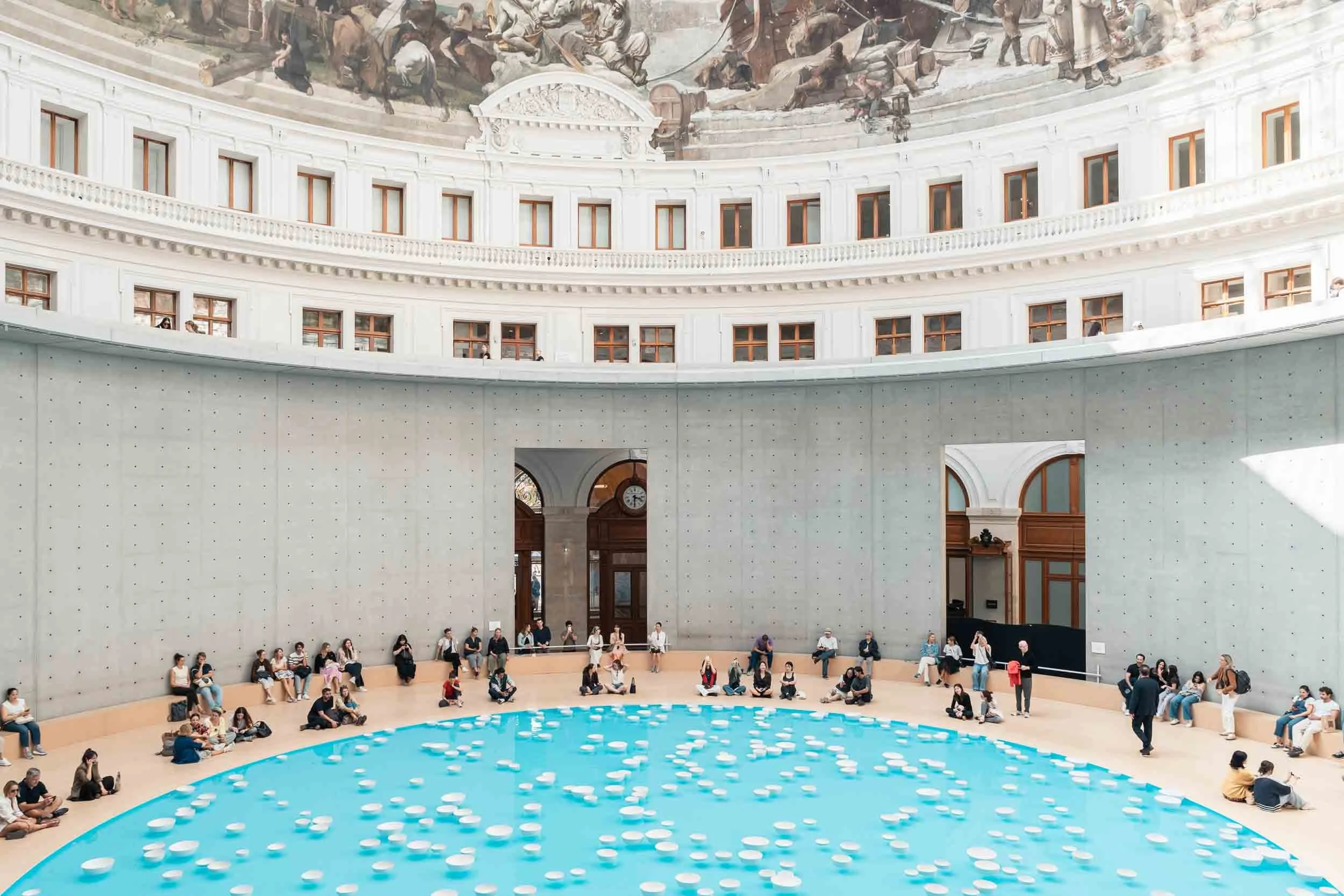
SeeWhen I first heard the gently resonating sounds of the bowls as they touched, it brought me back to Lerici, Italy. From our little hotel room above the marina, we could hear the riggings of the moored sailboats singing in the wind. This sound carries such fond and vivid memories for my husband and me. French artist Céleste Boursier-Mougenot transforms living spaces into immersive sound installations where nature becomes the composer. “I’m interested in the idea of delegation,” Boursier-Mougenot has said. He creates the conditions, but the birds and elements perform the art. It’s a beautiful surrender to unpredictability.
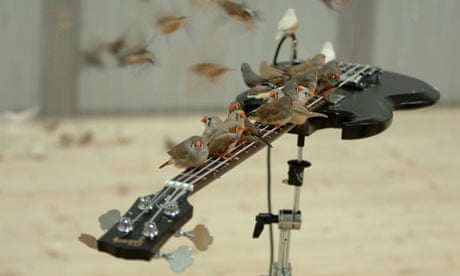
As you learn about the installations, be sure to listen to the sounds of orchestrated chance created by nature. hear to earAn installation of 5 electric guitars & amplifiers with real birds creating a live performance.
Céleste Boursier-Mougenot’s walk-through aviary inhabited by 40 zebra finches in a landscape of Gibson Les Pauls, at the Barbican’s Curve Gallery.
Picture this: dozens of small birds moving through a white room, their tiny feet plucking guitar strings, creating delicate, unexpected melodies. The space becomes a collaboration between artist, birds, and sound—where the boundaries between nature and art dissolve completely. In another stunning installation, rêvolutions, Boursier-Mougenot floated porcelain bowls in a pool of water. rêvolutions
As the bowls drift and collide, they produce gentle, percussion-like sounds—a meditation on chance, movement, and the music hidden in everyday objects. For his solo exhibition at the François Schneider Foundation, French artist Céleste Boursier-Mougenot transformed the entire art center in to a set of site-specific visual and sound installations. The works are connected by a watercourse that flows from the roof of the building through the entire art centre. Céleste Boursier-Mougenot is not new to the experience of merging sound and space. Trained in music, the Nice-based artist has always played with the codes of composition, emancipating himself from traditional forms. His work is firmly rooted in a lineage with the Dada and Fluxus movements.
He diverts ordinary objects – here, bowls – which he frees from their function to make them the mediums of a sound plastic expression. In clinamen, the artist allows the elements to produce an organic form themselves, a living music of the present moment. (artmajeur) Say What makes Boursier-Mougenot’s work so captivating? He invites us to experience art with our ears as much as our eyes. His installations remind us that music exists everywhere—in the flutter of wings, the clink of porcelain, the whisper of water. By giving agency to birds and objects, he challenges our ideas about authorship and control in art.
DoCreate Your Own Sound Exploration This week, become a sound artist like Boursier-Mougenot:
Bonus Challenge: Create a “sound map” of your home or neighborhood. Draw a simple map and mark where different sounds occur. What does your world sound like? About Céleste Bousier-Mougenot
Born in 1961 in Nice, Céleste Boursier-Mougenot lives and works in Sète. His works, which have been exhibited in contemporary art spaces for the last thirty years, both in France and abroad, should be seen primarily as those of a musician. Boursier-Mougenot began his creative journey as a composer for contemporary dance before discovering his unique artistic voice. His most celebrated work, from here to ear, features zebra finches flying freely through a gallery filled with electric guitars. As the birds land, hop, and flutter across the strings, they create an ever-changing symphony—a living, breathing concert that’s never the same twice. Read more: sfmoma, designboom |