It turns out that Art CAN make you healthier. |
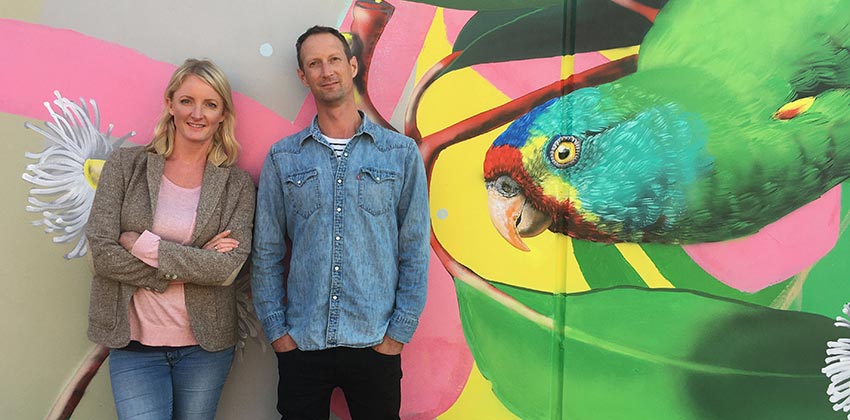
One of Martinich & Carran’s major projects for 2021 was to paint a series of murals in the Children’s Ward at the Joan Kirner Women’s and Children’s Hospital in Sunshine, Melbourne. “We wanted to create an artwork that was quite immersive to the viewer. Using striking luminous colors and bold expressive brushstrokes, with birds integrated through the work to give an identifiable and welcoming element to the work. SeeSeveral famous artists came to art through long illnesses. Many hospitals offer art therapy and have significant art collections. These investments are backed by studies and anecdotal ways that art helps their patients and their families. Art in hospitals is also linked to aiding the healing process and “reduces long-term traumatic experience,” states Stephanie Brinkop, Art Therapist
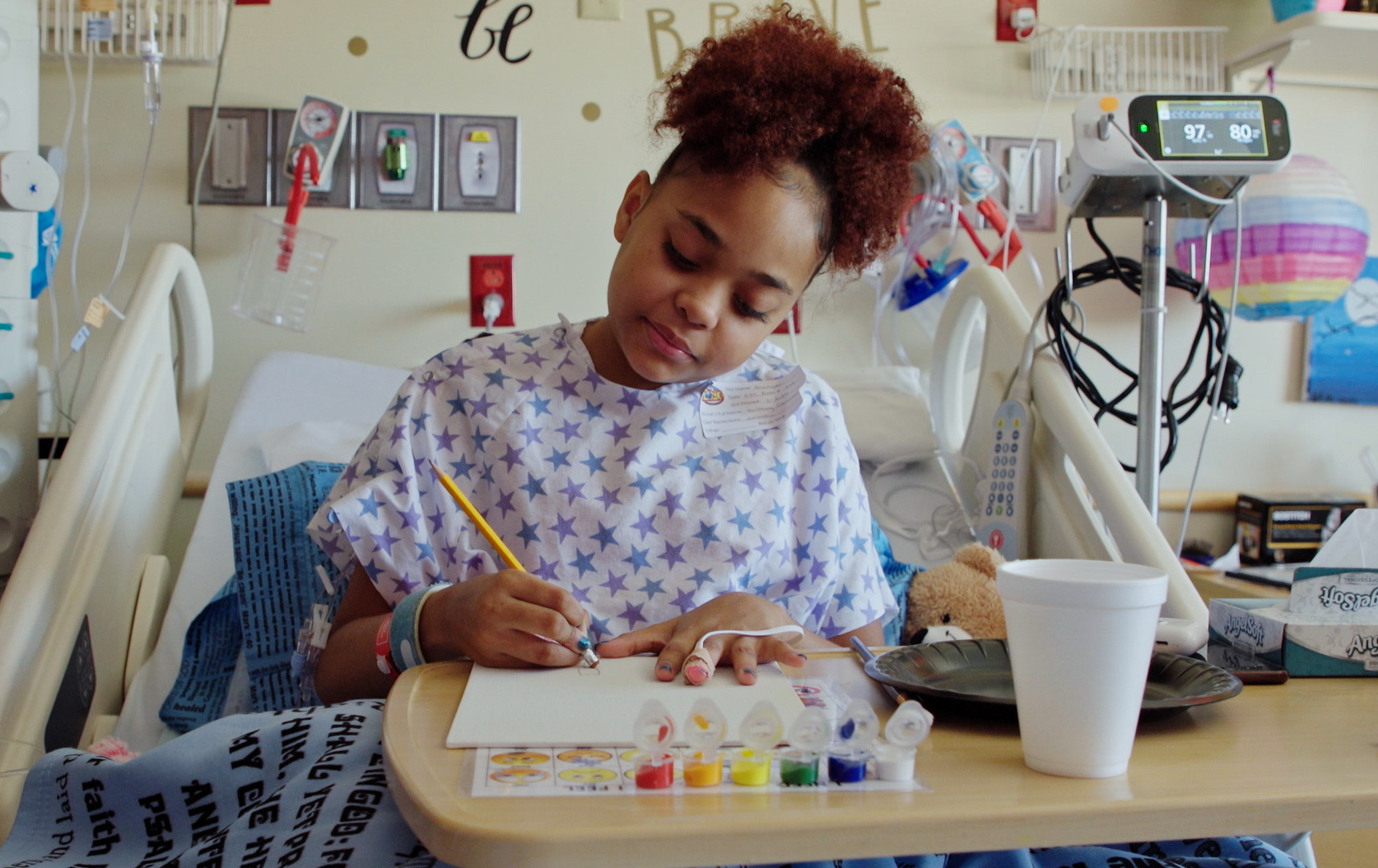
“When we engage in our making—I call it a moving meditation—we are so focused on what we’re doing that it allows us to take a breather from our worries,” Brinkop says. “The patient loses themself in the art process. They also have a beautiful outcome that they’re proud of—they can put it up in their room as a reminder of what they made.” –Phoenix Children’s art therapist Stephanie Brinkop
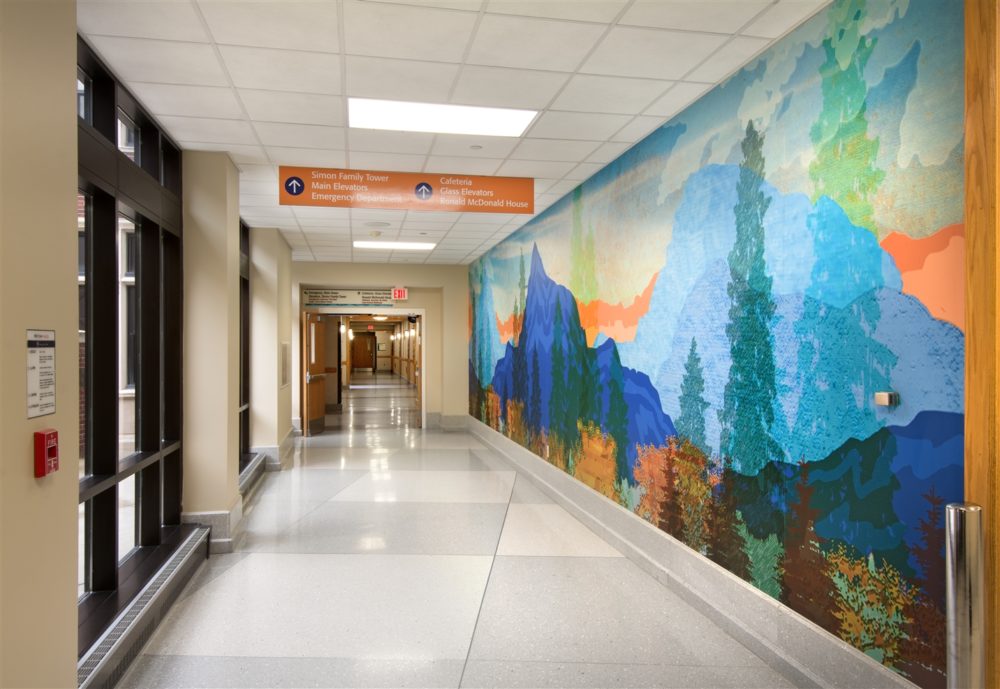
This CHI hospital installed an almost 90-foot rainbow of flowers to brighten a long corridor in the basement of an older building without access to natural light. Kurt Johnson Photography writes about the 5 best types of art for healing. Riley Children’s Hospital ProjectThe Riley Children’s Hospital commissioned artist Walter Knabe to create a series of murals designed to bring positivity and visual interest to several long hospital corridors. The project consisted of four colorful, whimsical murals created on a grand scale to provide a positive distraction for patients, families, and staff moving through the hospital. The purpose was threefold: to add an uplifting visual component to long hallways, to provide a pleasant interruption to the heavy thoughts often associated with hospital visits, and to create engaging spaces that both adults and children could enjoy. Water
Mountains
Flowers
According to one study published in the American Journal of Public Health, “there are clear indications that artistic engagement has significantly positive effects on health.” “Some hospitals are hiring experienced curators who draw from a variety of art mediums to create the best possible hospital experience and journey for patients, as well as staff,” said Allison Hays Lane, curator and archivist at University Health in San Antonio, Texas. “You only pass through life once, so make it count.”
Molly Blank
The Blank Foundation has started a non-profit called RxArt that works at the intersection of visual art and healthcare by pairing leading contemporary artists with pediatric hospitals. What I love about this project is that it promotes artists and children’s healing. CHILDREN’S HOSPITAL OF THE KING’S DAUGHTER
Being in a well-designed environment with exposure to color, light, and nature has many benefits, including:
“Working in health care is profoundly rewarding,” said ArtHouse Principal and Design Director Beth Rosa. “An increasing number of studies show that incorporating art into health care environments can have beneficial effects on patient recovery, and our designs offer unexpected moments of calm and wonderment during what can be an otherwise stressful time.” Say
Do
About Martinich and Carran
Melbourne-based artists Rowena Martinich and Geoffrey Carran work both independently and collaboratively to create giant public murals and collectible artworks. Their art has adorned buildings and spaces throughout Australia and prominent international commissions and exhibitions. Their work as individual artists informs and inspires their collaborative projects, marrying their two diverse practices of vibrant Abstract Expressionism and Representational painting. Martinich & Carran’s projects often blur the boundaries between art and design, focusing strongly on color. (Martinich and Carran) |